Copyright © 2025 Meiyuan Precision Technology Co., LTD.
What are the process requirements for the carbon fiber propeller edge protective cover?
2025-12-16
The metal protective sleeve (commonly referred to as the "propeller sleeve" or "edge guard") at the edge of the carbon fiber propeller is the core guarantee for achieving its functional design (anti-wear, anti-corrosion, lightning strike protection, and delamination suppression). These process requirements are extremely stringent, involving a precise integration of multiple engineering disciplines, including materials, mechanical, chemical, and composite materials. Below are the key requirements for this component across all stages from design to manufacturing:
1. Material Selection and Matching
Metal materials: Typically, titanium alloy or special stainless steel is selected.
Requirements: High specific strength, excellent fatigue resistance, outstanding corrosion resistance (especially in marine environments), and a thermal expansion coefficient matching that of carbon fiber (as close as possible to minimize thermal stress).
Adhesive: Select aerospace-grade structural adhesive (e.g., high-performance epoxy or acrylic adhesive).
Requirements: Extremely high shear and peel strength, excellent environmental aging resistance (resistance to damp heat, salt spray, and UV radiation), and good toughness to withstand impact and fatigue loads.
2. Interface treatment process
This is the most crucial step in determining the bonding strength and durability.
Metal surface treatment:
Cleaning and roughening: Conduct precision sandblasting to achieve a specific surface roughness, thereby increasing the mechanical bonding area.
Chemical activation: Perform anodic oxidation (on titanium alloys) or specialized chemical treatment to generate a porous, highly active oxide layer on the surface.
Apply primer/coupling agent: Immediately apply a dedicated primer or silane coupling agent to the treated metal surface. This step is crucial as it can form a strong chemical bond between metal oxides and organic adhesives, significantly enhancing adhesion and hydrolysis resistance.
Carbon fiber surface treatment:
Precision grinding: Conduct controlled grinding in the bonding area to remove the release agent and weak interfacial layer, but without damaging the main fibers.
Cleaning: Use a dedicated solvent to thoroughly clean, ensuring that there is no grease or dust.
3. Forming and integration process
Based on different design philosophies, there are primarily two advanced process routes:
Mechanical inlay/interference fit followed by bonding:
The metal sheath is individually precision-machined and formed, with the internal cavity dimensions slightly smaller than the design dimensions of the blade edge (interference fit).
The metal sheath is contracted by cooling it with liquid nitrogen, or the blade edge is expanded by heating it, and then assembled.
After returning to room temperature, a tight mechanical press fit is formed.
Inject high-performance adhesive into the mating gap, which will fill and cure through capillary action, forming a dual locking mechanism combining "mechanical and chemical" locking.
Requirements: Extremely high precision is required for part processing (dimensional tolerance, form and position tolerance); precise control of temperature and speed is necessary during the assembly process.
Co-curing/Secondary curing bonding:
Co-curing: Using the pre-treated metal sheath as part of the mold, it is directly integrated and formed during the curing process of the carbon fiber propeller body. This is the most ideal and highest strength approach.
Secondary bonding: First, the carbon fiber blades are cured. Then, the prepared metal sleeves are positioned using adhesive. In an autoclave or specialized tooling, they are cured and bonded following a precise temperature and pressure curve.
Requirements: Precise thermodynamic matching design is required to ensure coordinated expansion/contraction between the two at the curing temperature, avoiding residual stress-induced cracking or deformation; dedicated molding tools and fixtures are necessary.
4. Environmental and process control
Clean room environment: The bonding operation must be conducted in a clean room with controlled temperature and humidity and low dust to prevent contamination from affecting the interface.
Precise metering and mixing: Adhesives must be mixed evenly in strict proportions to avoid bubbles.
Curing control: Curing must be strictly carried out according to the temperature-time-pressure curve specified for the adhesive or resin system, as any deviation may lead to a significant decrease in performance.
5. Quality inspection and verification
Non-destructive testing:
Ultrasonic testing or laser speckle interferometry for misalignment detection: used to inspect the metal-carbon fiber bonding interface for defects such as delamination, voids, or debonding.
X-ray inspection: Check whether the internal structure is intact.
Destructive testing (for process validation samples):
Shear strength test, peel strength test: to verify whether the bonding strength meets the design standards.
Environmental aging test: After subjecting the sample to aging conditions such as high temperature and humidity, salt spray, ultraviolet radiation, and thermal cycling, a strength test is conducted to verify its long-term reliability.
In summary, the craftsmanship of the metal protective cover for the edge of a carbon fiber propeller is far from being a simple "edge wrapping" or "pasting". It is a cutting-edge system engineering that involves precision materials science, surface engineering, bonding technology, and composite material craftsmanship. The strict control and verification of each step are all aimed at ensuring that this crucial "armor" remains unbreakable throughout the entire life cycle of the propeller, safeguarding flight safety and performance.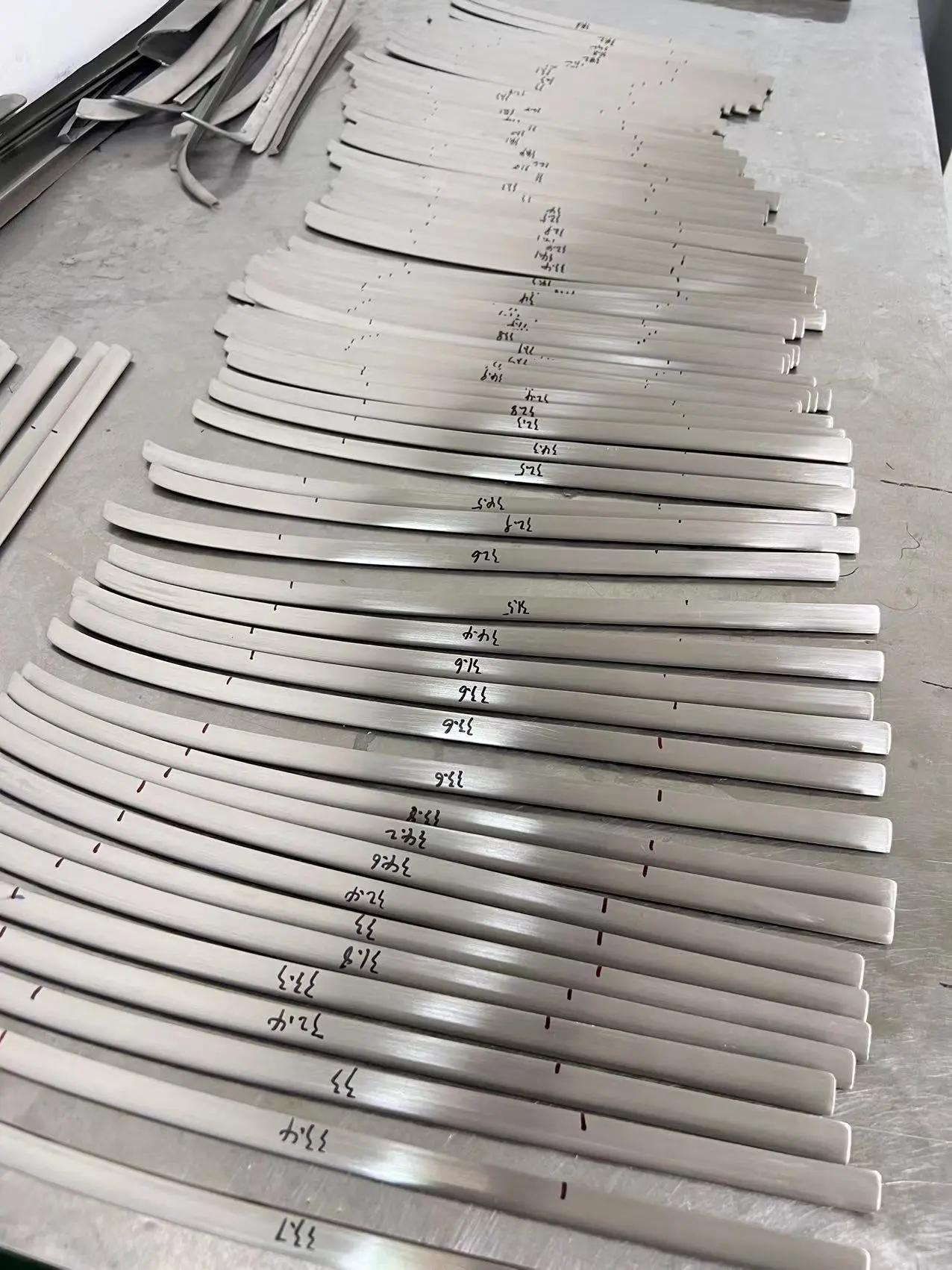
The metal protective sleeve (commonly referred to as the "propeller sleeve" or "edge guard") at the edge of the carbon fiber propeller is the core guarantee for achieving its functional design (anti-wear, anti-corrosion, lightning strike protection, and delamination suppression). These process requirements are extremely stringent, involving a precise integration of multiple engineering disciplines, including materials, mechanical, chemical, and composite materials. Below are the key requirements for this component across all stages from design to manufacturing:
1. Material Selection and Matching
Metal materials: Typically, titanium alloy or special stainless steel is selected.
Requirements: High specific strength, excellent fatigue resistance, outstanding corrosion resistance (especially in marine environments), and a thermal expansion coefficient matching that of carbon fiber (as close as possible to minimize thermal stress).
Adhesive: Select aerospace-grade structural adhesive (e.g., high-performance epoxy or acrylic adhesive).
Requirements: Extremely high shear and peel strength, excellent environmental aging resistance (resistance to damp heat, salt spray, and UV radiation), and good toughness to withstand impact and fatigue loads.
2. Interface treatment process
This is the most crucial step in determining the bonding strength and durability.
Metal surface treatment:
Cleaning and roughening: Conduct precision sandblasting to achieve a specific surface roughness, thereby increasing the mechanical bonding area.
Chemical activation: Perform anodic oxidation (on titanium alloys) or specialized chemical treatment to generate a porous, highly active oxide layer on the surface.
Apply primer/coupling agent: Immediately apply a dedicated primer or silane coupling agent to the treated metal surface. This step is crucial as it can form a strong chemical bond between metal oxides and organic adhesives, significantly enhancing adhesion and hydrolysis resistance.
Carbon fiber surface treatment:
Precision grinding: Conduct controlled grinding in the bonding area to remove the release agent and weak interfacial layer, but without damaging the main fibers.
Cleaning: Use a dedicated solvent to thoroughly clean, ensuring that there is no grease or dust.
3. Forming and integration process
Based on different design philosophies, there are primarily two advanced process routes:
Mechanical inlay/interference fit followed by bonding:
The metal sheath is individually precision-machined and formed, with the internal cavity dimensions slightly smaller than the design dimensions of the blade edge (interference fit).
The metal sheath is contracted by cooling it with liquid nitrogen, or the blade edge is expanded by heating it, and then assembled.
After returning to room temperature, a tight mechanical press fit is formed.
Inject high-performance adhesive into the mating gap, which will fill and cure through capillary action, forming a dual locking mechanism combining "mechanical and chemical" locking.
Requirements: Extremely high precision is required for part processing (dimensional tolerance, form and position tolerance); precise control of temperature and speed is necessary during the assembly process.
Co-curing/Secondary curing bonding:
Co-curing: Using the pre-treated metal sheath as part of the mold, it is directly integrated and formed during the curing process of the carbon fiber propeller body. This is the most ideal and highest strength approach.
Secondary bonding: First, the carbon fiber blades are cured. Then, the prepared metal sleeves are positioned using adhesive. In an autoclave or specialized tooling, they are cured and bonded following a precise temperature and pressure curve.
Requirements: Precise thermodynamic matching design is required to ensure coordinated expansion/contraction between the two at the curing temperature, avoiding residual stress-induced cracking or deformation; dedicated molding tools and fixtures are necessary.
4. Environmental and process control
Clean room environment: The bonding operation must be conducted in a clean room with controlled temperature and humidity and low dust to prevent contamination from affecting the interface.
Precise metering and mixing: Adhesives must be mixed evenly in strict proportions to avoid bubbles.
Curing control: Curing must be strictly carried out according to the temperature-time-pressure curve specified for the adhesive or resin system, as any deviation may lead to a significant decrease in performance.
5. Quality inspection and verification
Non-destructive testing:
Ultrasonic testing or laser speckle interferometry for misalignment detection: used to inspect the metal-carbon fiber bonding interface for defects such as delamination, voids, or debonding.
X-ray inspection: Check whether the internal structure is intact.
Destructive testing (for process validation samples):
Shear strength test, peel strength test: to verify whether the bonding strength meets the design standards.
Environmental aging test: After subjecting the sample to aging conditions such as high temperature and humidity, salt spray, ultraviolet radiation, and thermal cycling, a strength test is conducted to verify its long-term reliability.
In summary, the craftsmanship of the metal protective cover for the edge of a carbon fiber propeller is far from being a simple "edge wrapping" or "pasting". It is a cutting-edge system engineering that involves precision materials science, surface engineering, bonding technology, and composite material craftsmanship. The strict control and verification of each step are all aimed at ensuring that this crucial "armor" remains unbreakable throughout the entire life cycle of the propeller, safeguarding flight safety and performance.